Aged White Tea:
From Fresh Leaf to “Seven Years Treasure”
Last reviewed: July 2026 · By the White Tea Central editorial team
Quick answer
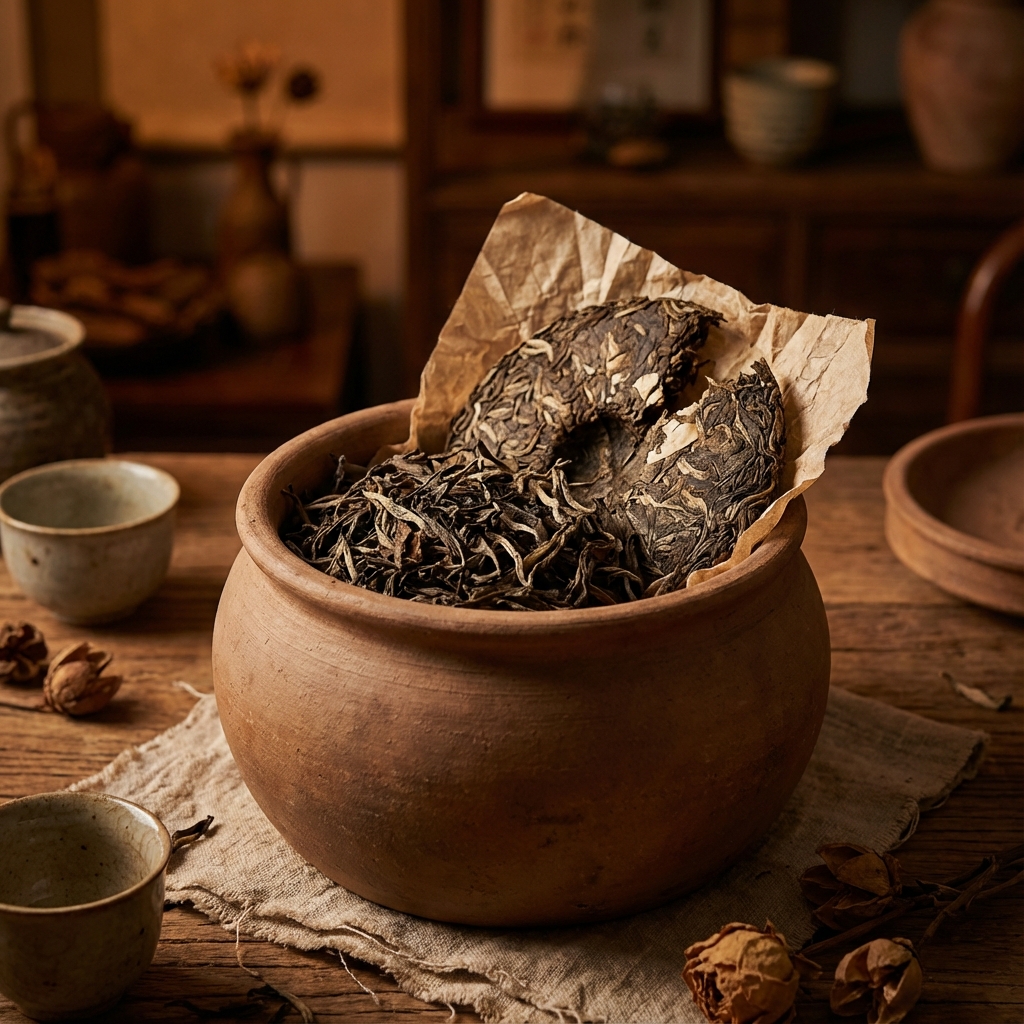
White tea is one of the few teas that genuinely improves with age. Stored dry and away from odors, its flavor evolves from fresh hay and florals toward honey, dried fruit, herbs and wood over 3–7+ years. Leafy grades — Shou Mei, Gong Mei and White Peony — age best and are usually pressed into cakes; Silver Needle ages well but is expensive to cellar. The key risks when buying are inflated age claims and damp storage.
Why white tea ages when green tea doesn't
Green tea is fixed with heat early in processing, which halts its enzymes — so its fate is to slowly lose freshness. White tea is only withered and dried, never heat-fixed, leaving enzymes and reactive compounds gently active. Over years, slow oxidation and non-enzymatic reactions round off the brisk top notes and build the darker, sweeter compounds that give aged white tea its dates-and-honey depth.
This is transformation, not preservation: an aged white tea is a different drink from its fresh self, closer in spirit to a light aged puerh than to the delicate cup it started as. Whether that trade is worth it is a matter of taste — which is why we recommend buying enough of a tea you like to drink some now and revisit the rest each year.
Flavor timeline
Hay, florals, melon — bright, delicate, closest to the leaf. Silver Needle and White Peony shine here.
The bright top notes fade before depth arrives; many teas taste quieter and 'in between' during this phase.
Honey, dried apricot, herbs and a rounder, thicker body emerge. The traditional 'three years medicine' stage.
Dates, wood, warm spice and a smooth, almost broth-like sweetness. The 'seven years treasure' stage — and the point where provenance matters most.
Which grades are worth aging
| Grade | Verdict | Why |
|---|---|---|
| Shou Mei | The aging workhorse | Mature leaves transform the most dramatically and cost the least to cellar. Most aged white tea cakes on the market are Shou Mei. |
| Gong Mei | Excellent value | Ages along the same path as Shou Mei with a slightly sweeter edge from its small buds. |
| White Peony | The connoisseur's choice | Enough leaf to transform, enough bud for elegance — aged Bai Mu Dan balances depth and refinement. |
| Silver Needle | Ages well, rarely aged | Develops honeyed depth, but its price makes long cellaring an expensive bet; most drinkers enjoy it fresh. |
Home storage that works
- Dry: aim for 50–60% relative humidity. White tea wants dry aging — damp storage ruins it (this is where it differs from puerh).
- Sealed but not vacuum-packed: food-grade kraft bags inside a tin or ceramic jar limit airflow while allowing the slow exchange aging needs.
- Dark and cool: a stable room-temperature cupboard away from sunlight, radiators and appliances.
- Odor-free: tea absorbs smells permanently — keep it far from spices, coffee and cleaning products.
- Cakes over loose leaf for the long haul: pressed tea ages more slowly and evenly, takes less space, and is the traditional aging format.
Buying risks to watch for
Inflated age claims
Genuinely old white tea is scarce — large-scale white tea production for aging only took off in the 2010s. A cheap cake labeled “15 years aged” deserves heavy skepticism. Look for a stated production year, origin and, ideally, storage history.
Wet or careless storage
Mustiness, damp-cardboard smells or a flat, lifeless cup mean the tea degraded instead of aging. Good aged white tea smells clean: dates, dried apricot, herbs, warm wood.
Artificially darkened tea
Some producers wet-pile or heavily heat leaf to mimic age. Uniformly dark brown leaves with no variation, or a cup that tastes roasted rather than honeyed, are warning signs.
Brewing aged white tea
Aged white tea likes heat. Use water at 95–100 °C, gongfu style (4–5 g per 100 ml, 25-second steeps) — and don’t stop at steeping: well-aged Shou Mei rewards gentle simmering in a pot for a rich, dates-and-honey broth, a traditional way to finish leaves after several infusions.
Dial in your parameters with the interactive Brew Lab.
Aged white tea FAQ
Does white tea really improve with age?
Yes — white tea is one of the few tea types traditionally aged. Its minimal processing leaves active compounds that slowly transform, shifting the flavor from fresh hay and florals toward honey, dried fruit, herbs and wood over 3–7+ years. The Fujianese saying 'one year tea, three years medicine, seven years treasure' describes this arc. Proper dry, odor-free storage is essential; badly stored tea degrades rather than ages.
Which white tea is best for aging?
Leafy grades age best and most affordably: Shou Mei is the classic choice, followed by Gong Mei and White Peony. Their mature leaves transform dramatically. Silver Needle also ages well but is expensive to cellar, so it is usually drunk fresh. Pressed cakes (bing) age more slowly and evenly than loose leaf.
How should I store white tea for aging?
Keep it dry (ideally 50–60% relative humidity), sealed from strong airflow, away from light, heat and any odors — tea absorbs smells readily. Unlike puerh, white tea does not want humid storage. Food-grade kraft bags inside a tin or ceramic jar, in a stable room-temperature cupboard, work well for home aging.
How can I tell if an 'aged' white tea is genuine?
Ask for a stated production year and origin, and be skeptical of dramatic age claims at low prices — genuinely old, well-stored white tea is scarce. Good aged tea smells of dates, dried fruit and herbs; mustiness, dampness or a flat cardboard smell indicate poor storage. Buying from sellers who disclose storage conditions is the best protection.
Does aged white tea have less caffeine?
No meaningful difference — caffeine is chemically stable, so an aged tea carries roughly the caffeine of the fresh tea it was made from. Aging changes aroma, taste and color far more than caffeine content.